Archival Research and How to Deal with What You Find. An article by Michaela Buckel, Program Director at March of Life
Ever since the U.S. National Archives published the NSDAP membership records online in March 2026, Germany has seen a veritable boom in historical research. Suddenly, people could anonymously search online and find out: Were my ancestors Nazis?
Demand was so high that the National Archives website was unavailable for days due to server overload. News outlets such as DER SPIEGEL quickly responded by offering their own AI-powered search tools for a subscription fee. This was necessary because the original search function does not lead to individual names, but rather to digitized microfilms containing more than a thousand individual pages each, which users then have to search themselves. Anyone hoping to find what they are looking for within five minutes will be disappointed. Yet in Germany, every citizen has already had the legal right to access records concerning their ancestors directly through the Federal Archives since 1988 – almost 40 years ago.
Researching the Archives
In Germany, archival records are generally freely accessible once they are more than 30 years old. For documents containing personal information, an additional protection period applies: ten years after the death of the person concerned or, if the year of death is unknown, 100 years after their birth. These records include files relating to the SS, SA, judges and civil servants under the Nazi regime, the Wehrmacht – and, of course, the NSDAP membership database. To request information, all you need is an informal application through the Federal Archives website, a copy of your ID, and a processing fee of approximately €25. These days, responses usually arrive within a few months.
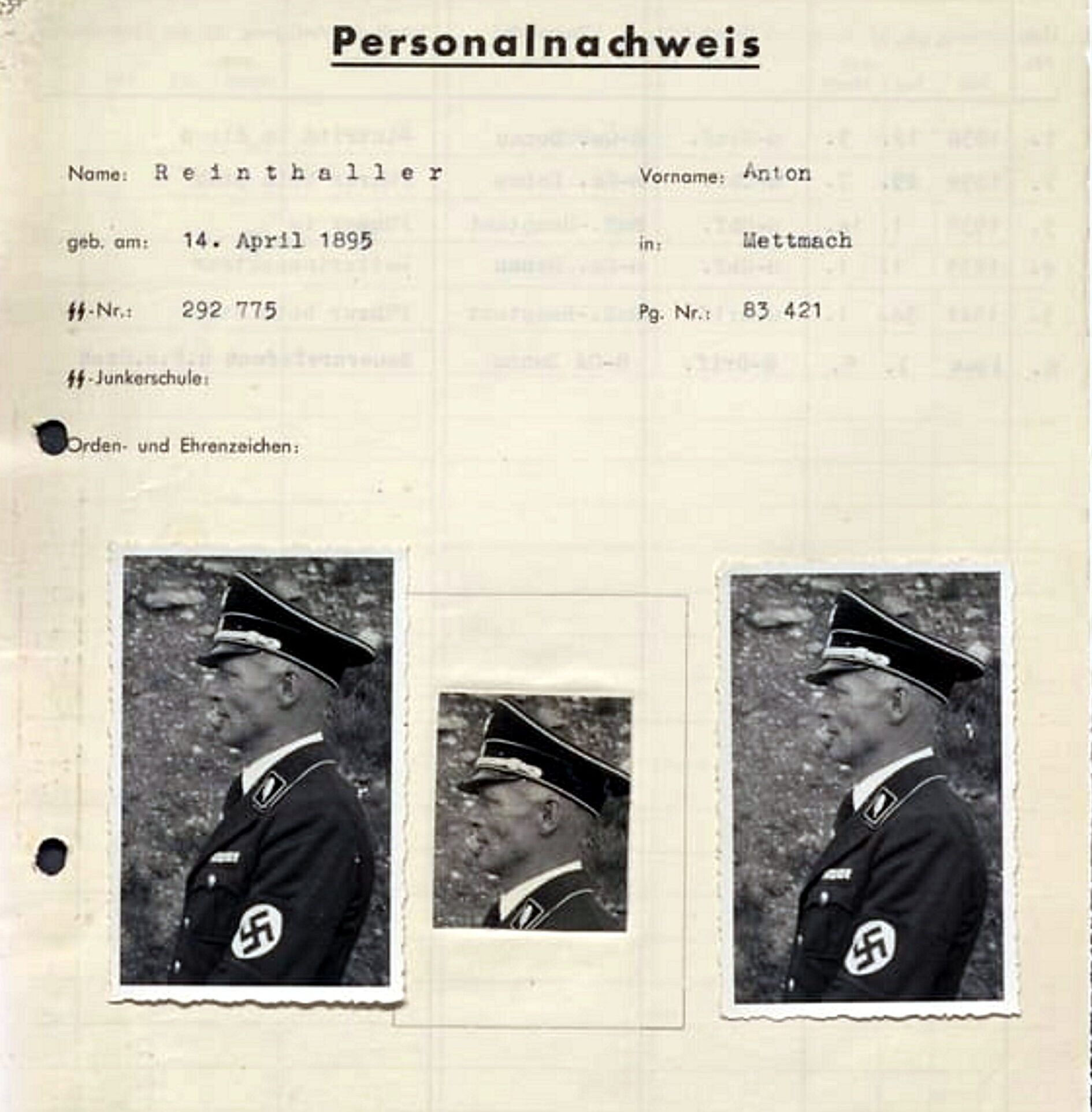
Although the National Socialists ordered the destruction of the NSDAP membership records shortly before the end of the war, around 80% of the membership files have survived to this day. In 1945, the party had approximately nine million members – one in five adult Germans. The membership card shows, among other things, the date a person joined the party, which can provide initial clues about their motives. The same applies to information about a person’s military service in the Wehrmacht. Some soldiers were involved from the very first day of the invasion of Poland on September 1, 1939, while others served only for a few months as part of the Volkssturm in the spring of 1945.
But the really important question is: What do these documents actually tell us about our own families and their involvement? The responses received directly from the archives can vary considerably.
Scenario 1: No Information Available
“The records may have been lost due to the effects of the war” is a common response. Thousands of files were indeed destroyed by bombs, fires, or deliberate acts of destruction. However, alternative sources are available. Regional and state archives hold Gestapo, court, and regional Nazi Party records that are not part of the Federal Archives. Church archives and registry offices can provide information about births, baptisms, marriages, deaths, and often occupations as well.
The Arolsen Archives, the world’s largest archive on Nazi persecution, have been freely searchable online since 2019. Your own family’s documents can be particularly helpful: military ID books, pay books, or letters from the front can provide valuable information for further research. The same applies to surviving war diaries and unit histories held at the Federal Archives’ Military Archives in Freiburg, provided you know which military unit your ancestor belonged to.
Scenario 2: Information About Wehrmacht Units
In most cases, the archives provide two to three A4 pages documenting a soldier’s military career: the date of enlistment, their original unit, subsequent units, and areas of deployment. At first, this information may not mean much to those without a military background, but it can be researched further. One useful resource is Georg Tessin’s standard reference work, Verbände und Truppen der deutschen Wehrmacht und Waffen-SS 1939–1945 (Units and Formations of the German Wehrmacht and Waffen-SS, 1939–1945), which the Federal Archives has made available digitally free of charge. Another resource is the privately run website Lexikon der Wehrmacht.
Using AI in “in-depth research” mode, it is possible to quickly find out more about a unit’s responsibilities and the events that took place during its deployment. Anyone using this approach should always ask for the sources to be provided and verify them, as AI can sometimes get creative in its analysis.
To understand what happened to civilians, prisoners of war, or the Jewish population at a particular deployment location, additional sources are needed. This is why we, as the Decke des Schweigens (Breaking the Silence) team, established the Aufarbeitungscafé (Historical Reflection Café) via Zoom, which can provide further assistance.
Scenario 3: An Entire Personnel File
If your ancestors were civil servants during the Nazi era or were involved in court proceedings, a personal file may still exist. You can view it in person in the archive’s reading room or request a copy for a fee. Here, too, it is important to place the sources in their historical context in order to understand what they reveal – and what they do not. Historians are the best people to turn to for this, but memorial sites and archives also sometimes offer workshops or materials to help put the findings into perspective.
And What Happens Next?
Research often brings surprising things to light – things that were never discussed in the family: Grandpa had actually been an NSDAP member since 1932. He did not just fight in Russia but also took part in anti-partisan operations in Italy in 1944. Or he was repeatedly hospitalized because of a sexually transmitted disease. How much did he know about the Holocaust? To what extent was the Wehrmacht involved in crimes against Jews and the civilian population? What did it mean to be a civil servant under the Nazi dictatorship? The facts are one thing. What they trigger within us personally is another.
In our Decke des Schweigens (Breaking the Silence) seminars, we bring together historical context, psychological insights into transgenerational influences, and the biblical perspective. This is because there is often a part of us that does not want to acknowledge uncomfortable facts about our own family. We read in black and white that Grandpa really was a Nazi – yet somehow, it does not truly sink in. This is precisely the Decke des Schweigens (the “cover of silence”) that needs to be broken.
Helpful Links for Your Own Research
-
Register for the Aufarbeitungscafé by emailing info@diedeckedesschweigens.de
-
Gestern ist heute (Yesterday Is Today) – a podcast by the Federal Agency for Civic Education about family history during the Nazi era
-
www.bundesarchiv.de/im-archiv-recherchieren/archivgut-recherchieren/personen-und-familienforschung/
-
bit.ly/Recherchedienste – A list of historians and archival research services that can assist with your research
-
Research seminar on family history – held every spring and fall at the Neuengamme Concentration Camp Memorial
This article was published in the November 2026 issue (No. 15) of the magazine “Stimme Erheben” (Raise Your Voice) in German.
This article was translated using AI.